
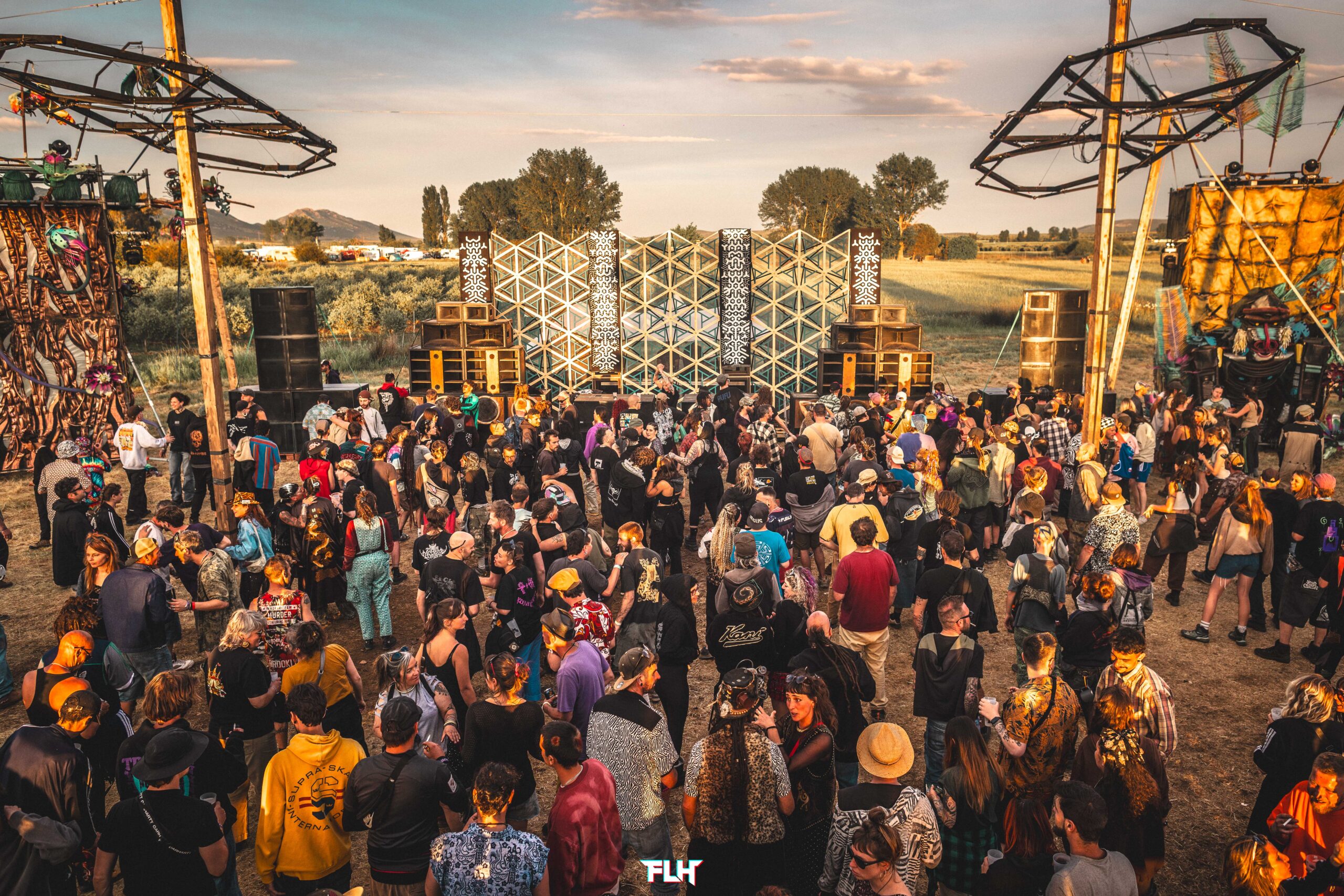
Kommunity Fayre ritorna nel 2027: ecco cosa è successo alla prima edizione
La seconda edizione è confermata dal 6 al 9 maggio in Spagna. Noi vi raccontiamo cos’è stato davvero il Kommunity Fayre 2026 — il report, gli artisti SUM e perché questo evento conta per tutta la scena.
La notizia è arrivata ieri: Kommunity Fayre è confermato per una seconda edizione, dal 6 al 9 maggio 2027 in Spagna, con più musica, più creatività e più comunità, stando alle parole degli organizzatori. I biglietti sono già in vendita — Tier 1 a 50 euro, Tier 2 a 60, Tier 3 a 70 — e il fatto che esistano tre fasce di prezzo progressive dice già qualcosa su come questo evento pensa all’accesso.
Mentre la notizia circolava, ci siamo trovate a rileggere gli appunti di maggio, i messaggi scambiati durante quei quattro giorni a Ciudad Real, e abbiamo capito che era il momento giusto per raccontare cos’è stato davvero.

Ciudad Real, maggio 2026
Dal 8 all’11 maggio, la piccola città di Ciudad Real, nel cuore della Spagna, ha ospitato il Kommunity Fayre, prima edizione di un festival che ha visto crew storiche della scena tekno – Spiral Tribe, KernelPanik, Drop’In Caravan e Zulù Klub – affiancarsi a nuovi collettivi come Kollage Kollectiv e Colectivo Fuso. Un esperimento riuscito che, come suggerisce il nome stesso, ha permesso alla comunità tribe proveniente da tutta Europa di riunirsi nuovamente in una grande celebrazione, seppur attraverso nuove forme e modalità.
Tra piantagioni di pistacchi e gli inconfondibili paesaggi della Castilla-La Mancha, flotte di ravers di ogni età e provenienza hanno raggiunto il Kommunity Fayre a bordo di van e camper.
Ad attenderli c’erano quattro palchi, ognuno con un’identità precisa.
Elektrik Jungle
L’Elektrik Jungle, organizzato da Kernel Panik, Drop’In Caravan e Spiral Tribe, ospitava scenografie jungle al neon che facevano da sfondo al vero protagonista dello stage — un soundsystem imponente e ipnotico, lo stesso che appare nelle scene iniziali di Sirât, film del 2025 vincitore del Premio della Giuria a Cannes e candidato agli Oscar, capace di avvicinare la scena rave al cinema d’autore come raramente era accaduto prima.
The Freaktion
The Freaktion, organizzato dal collettivo Zulù Klub e Mood Swings, aveva trasformato un semplice tir in un palco dall’aspetto monumentale, ospitando band, DJ set e live set in una cornice che non ti aspetti.
Space Oddity
Space Oddity, nato dalla collaborazione tra Kollage Kollectiv, Colectivo Fuso e Gruta, immergeva il pubblico in un’atmosfera pienamente cyberpunk, con intrecci di cavi e schermi verticali montati su colonne al centro del dancefloor.
La Cabanya del Dub
E poi c’era La Cabanya del Dub, curata da Kilimanjaro Hi-Fi, che attraverso i bassi profondi della dub rappresentava il lato più caldo e sanguigno del festival.
A New Kind of Gathering — Built on Equality
Nonostante l’appellativo di “festival”, Kommunity Fayre si allontana dall’idea tradizionale legata a questo termine. A renderlo speciale è stata infatti l’assenza di headliner intenti a monopolizzare l’attenzione: al loro posto, circa 150 artisti si sono alternati senza sosta sui quattro palchi, giorno e notte.
Dopotutto, il motto stesso del festival recita: “A New Kind of Gathering — Built on Equality”. Ed è proprio questo senso di rispetto reciproco, collaborazione e comunità ad aver rappresentato il vero motore trainante di Kommunity Fayre, dall’inizio alla fine.

Il mondo di SUM
A rappresentare SUM sul suolo spagnolo ci hanno pensato due artisti chiave della scena tekno: Maskk e Insane Teknology, protagonisti di due live set che hanno accompagnato l’Elektrik Jungle stage dall’oscurità della notte fino alle prime luci dell’alba.
Maskk, cofondatore della crew KernelPanik, ha aperto il set con la sua ultima traccia, “NO ICE”, realizzata in collaborazione con Danno e DJ Baro dei Colle der Fomento, storico gruppo hip hop degli anni ’90. Un inizio travolgente, in cui l’energia dell’improvvisazione ha conquistato il pubblico dell’Elektrik Jungle sotto una pioggia incessante di beat.
A seguire, Insane Teknology, tra i producer tekno più influenti della scena underground europea, ha raccolto il testimone con un live set potente e magnetico, ammaliando la folla grazie alla sua capacità di creare sul momento sonorità estremamente varie ed esaltanti.
Mentre ci esaltavamo seguendo gli spettacoli sui vari stage, abbiamo realizzato che il Kommunity Fayre conta davvero, e per capirlo bisogna analizzare cosa è successo intorno alla scena in questi ultimi anni.
La repressione dei raduni liberi
La repressione verso la cultura dei raduni liberi cresce in tutta Europa, e chi organizza free party oggi lo fa sapendo che rischia molto di più di quanto non rischiasse dieci anni fa. In Italia il decreto anti-rave è legge, con pene fino a sei anni per chi organizza raduni su proprietà altrui con più di cinquanta persone, mentre in Francia una legislazione sempre più stringente dà alle prefetture poteri straordinari di blocco e sequestro — come raccontiamo più in dettaglio nel nostro pezzo sulla legge Ripost QUI.

Il mercato che divora la cultura
Come abbiamo già scritto analizzando il caso KKR e Superstruct, quattro soli gruppi societari controllano oggi la maggioranza dei festival musicali europei, trasformando la cultura in asset finanziario e finanziando realtà spesso lontanissime dalla nostra etica. Biglietti sempre più cari, lineup sempre più omogenee, festival costruiti attorno a sponsor piuttosto che attorno a comunità reali — accedere alla cultura live sta diventando un privilegio economico, e preservare una cultura accessibile e libera è una responsabilità collettiva che non possiamo delegare ad altri.
Un modello alternativo, concreto
Il Kommunity Fayre ha fatto l’opposto. Settanta euro per l’accesso completo, prezzi unificati ai bar, gestione orizzontale condivisa tra nove crew, trasparenza su ogni aspetto dell’organizzazione, una dichiarazione politica, anche se nessuno la chiama così.
Spiral Tribe, Drop’In Caravan, Kernel Panik sono la stessa gente che per trent’anni ha montato sound system in campi aperti, capannoni abbandonati e strade di periferia, rischiando sequestri, multe e sgomberi, e che insieme alla nuova generazione, Kollage Kollectiv, Colectivo Fuso e Gruta, ha scelto di trasformare quell’esperienza in un modello nuovo, pagante quanto basta per coprire i costi e portare la qualità che meritano sia chi ci va sia chi ci lavora. Come scrivevamo nell’articolo La Tekno è Politica, il free party è sempre stato un atto di autodeterminazione collettiva, e il Kommunity Fayre ne è la continuazione logica in un contesto cambiato.

Un dovere morale, oltre che un piacere
Esiste un dualismo strano che si agita nella testa di una parte della scena ogni volta che una crew storica organizza un evento a pagamento, come se il passaggio dal rave gratuito all’evento accessibile fosse una caduta o una resa, ma è una lettura pigra, che ignora la realtà storica in cui viviamo. Un rave resta un rave, e il Kommunity Fayre ha costruito un’alternativa al mercato con le stesse mani che per decenni hanno costruito palchi senza permesso. Sostenere questo percorso è un piacere, ma per noi è anche qualcosa che assomiglia a un dovere morale verso chi ha costruito quella cultura a proprie spese, spesso letteralmente.
Quello che abbiamo vissuto a Ciudad Real si chiama comunità, ed è esattamente ciò che il mercato dell’intrattenimento mainstream non riesce a replicare. Le nuove generazioni che si avvicinano alla scena underground meritano di conoscere questa storia, di viverla come insieme di valori concreti — accessibilità, orizzontalità, cura reciproca, sicurezza degli spazi. Portarle dentro eventi come il Kommunity Fayre è trasmissione culturale, qualcosa che vale la pena proteggere.
Ci vediamo a maggio 2027.
ENGLISH VERSION
Kommunity Fayre is back in 2027 — here’s what happened at the first edition
The second edition is confirmed from May 6 to 9 in Spain. We tell you what Kommunity Fayre 2026 really was — the report, the SUM artists and why this event matters for the whole scene.
The news dropped yesterday: Kommunity Fayre is confirmed for a second edition, from May 6 to 9, 2027 in Spain, with more music, more creativity and more community, in the words of the organisers. Tickets are already on sale — Tier 1 at €50, Tier 2 at €60, Tier 3 at €70 — and the fact that three progressive price tiers exist already says something about how this event thinks about access. As the news spread, we found ourselves rereading our notes from May, the messages we exchanged during those four days in Ciudad Real, and we realised it was the right moment to tell the story of what it really was.
Ciudad Real, May 2026
From the 8th to the 11th of May, the small city of Ciudad Real, in the heart of Spain, hosted the Kommunity Fayre — the first edition of a gathering that brought together historic crews from the tekno scene, Spiral Tribe, KernelPanik and Drop’In Caravan, alongside newer collectives like Kollage Kollectiv and Colectivo Fuso. A successful experiment that, as the name itself suggests, allowed the tribe community from across Europe to reunite in one large celebration, though through new forms and new ways of doing things.
Among pistachio plantations and the unmistakable landscapes of Castilla-La Mancha, fleets of ravers of every age and background arrived by van and camper, building a camp that within a few hours already had its own logic and its own life.
Elektrik Jungle
The Elektrik Jungle, organised by Kernel Panik, Drop’In Caravan and Spiral Tribe, hosted neon jungle scenographies that framed the real protagonist of the stage — an imposing and hypnotic sound system, the same one that appears in the opening scenes of Sirât, the 2025 film that won the Jury Prize at Cannes and was nominated for the Oscars, bringing the rave scene to arthouse cinema in a way that had rarely happened before.
The Freaktion
The Freaktion, organised by the Mood Swings collective, had transformed a simple articulated lorry into a monumental stage, hosting bands, DJ sets and live sets in a setting you would never have expected.
Space Oddity
Space Oddity, born from the collaboration between Kollage Kollectiv, Colectivo Fuso and Gruta, immersed the audience in a fully cyberpunk atmosphere, with webs of cables and vertical screens mounted on columns at the centre of the dancefloor.
La Cabanya del Dub
And then there was La Cabanya del Dub, curated by Kilimanjaro Hi-Fi, which through the deep bass of dub represented the warmest and most visceral side of the festival.
A New Kind of Gathering — Built on Equality
Despite being called a festival, Kommunity Fayre moves away from the traditional idea associated with that term. What made it special was the absence of headliners intent on monopolising attention — in their place, around 150 artists took turns across the four stages, day and night, without pause. The festival’s own motto says it best: A New Kind of Gathering — Built on Equality, and it was exactly that sense of mutual respect, collaboration and community that drove everything from beginning to end.
SUM artists
Representing SUM on Spanish soil were Maskk and Insane Teknology, two of the key figures of the tekno scene, who delivered two live sets that accompanied the Elektrik Jungle stage from the darkness of the night through to the first light of dawn.
Maskk, co-founder of the KernelPanik crew, opened with his latest track “NO ICE”, made in collaboration with Danno and DJ Baro of Colle der Fomento, the legendary Italian hip hop group from the 1990s — a powerful opening, where the energy of improvisation won over the Elektrik Jungle crowd under a relentless barrage of beats. Insane Teknology then picked up the baton with a powerful and magnetic live set, building in real time an extraordinary variety of sounds, the kind of set that keeps you hooked precisely because you never know where it’s going.
The repression of free gatherings
As we were getting carried away following the sets across the stages, we realised that Kommunity Fayre really matters — and to understand why, you have to look at what has been happening around the scene in recent years. The repression of free gathering culture is growing across Europe, and those who organise free parties today do so knowing the risks are far greater than they were ten years ago. In Italy, the anti-rave decree has been law since 2022, with sentences of up to six years for those who organise gatherings on private property with more than fifty people, while in France increasingly tight legislation gives prefectures extraordinary powers of blockage and seizure — as we cover in more detail in our piece on the Ripost law.
The market devouring culture
As we wrote when analysing the KKR and Superstruct case, just four corporate groups control the majority of European music festivals today, turning culture into a financial asset and funding realities that are often far removed from our ethics and vision. Tickets getting more expensive, lineups getting more homogeneous, festivals built around sponsors rather than real communities — accessing live culture is becoming an economic privilege, and preserving a culture that is accessible and free is a collective responsibility we cannot delegate to others.
A concrete alternative
Kommunity Fayre did the opposite. Seventy euros for full access, unified bar prices, horizontal management shared among nine crews, transparency across every aspect of the organisation — a political statement, even if nobody calls it that. Spiral Tribe, Drop’In Caravan and Kernel Panik are the same people who for thirty years set up sound systems in open fields, abandoned warehouses and city streets, risking seizures, fines and evictions, and who together with the new generation — Kollage Kollectiv, Colectivo Fuso and Gruta — chose to turn that experience into something new, accessible and horizontal, paying just enough to cover costs and deliver the quality that both audiences and workers deserve. As we wrote in our article La Tekno è Politica, the free party has always been an act of collective self-determination, and Kommunity Fayre is its logical continuation in a changed context.
A moral duty, as well as a pleasure
There is a strange contradiction that runs through part of the scene whenever a historic crew organises a ticketed event, as if moving from the free rave to the accessible event were a fall or a surrender, but it is a lazy reading that ignores the historical reality we live in. A rave remains a rave, and Kommunity Fayre built an alternative to the market with the same hands that for decades built stages without permission. Supporting this path is a pleasure, but for us it also feels like a moral duty towards those who built that culture at their own expense, often literally.
What we experienced in Ciudad Real is called community, and it is exactly what the mainstream entertainment market cannot replicate. The new generations approaching the underground scene deserve to know this history, to live it as a set of concrete values — accessibility, horizontality, mutual care, safe spaces. Bringing them into events like Kommunity Fayre is cultural transmission, something worth protecting.
See you in May 2027.
by Flavia and Marta for SUM
Lascia un commento