
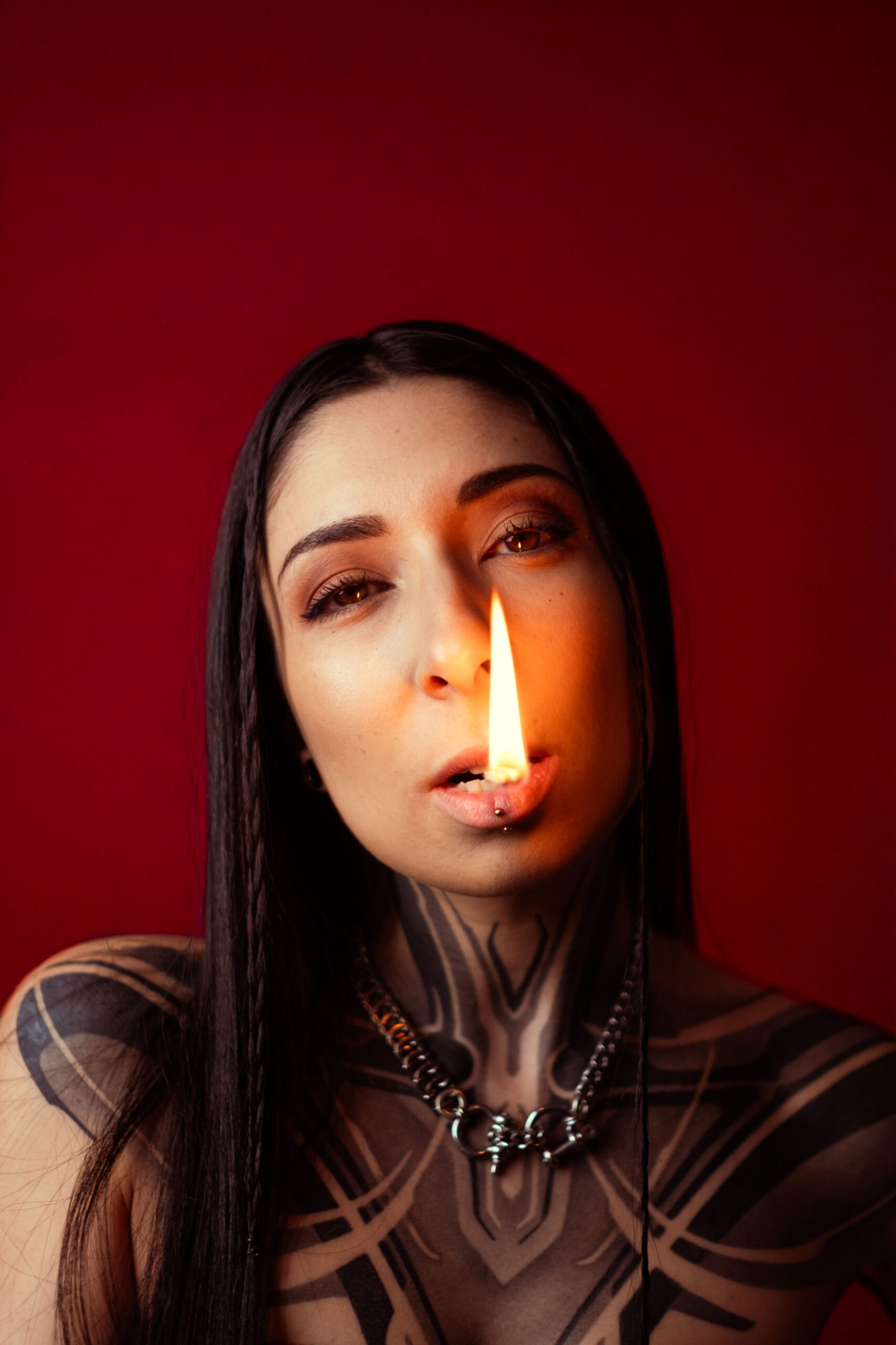
INTERVIEW: MISLIGHT
From Morocco to free party scene, from vinyl to her own label ŪNVØLD Records — we sat down with MISLIGHT, the newest addition to the SUM roster, to talk sound, identity and why none of it involves shortcuts.
Sab has been shaping her sound since 2013. Originally from Morocco, she grew up between two cultures before landing in the south of France, where the free party scene became her second home and her real school. She learned to DJ on vinyl, playing tribe music at fifteen, surrounded by people who passed on something more than technique — a way of understanding music as a collective act.
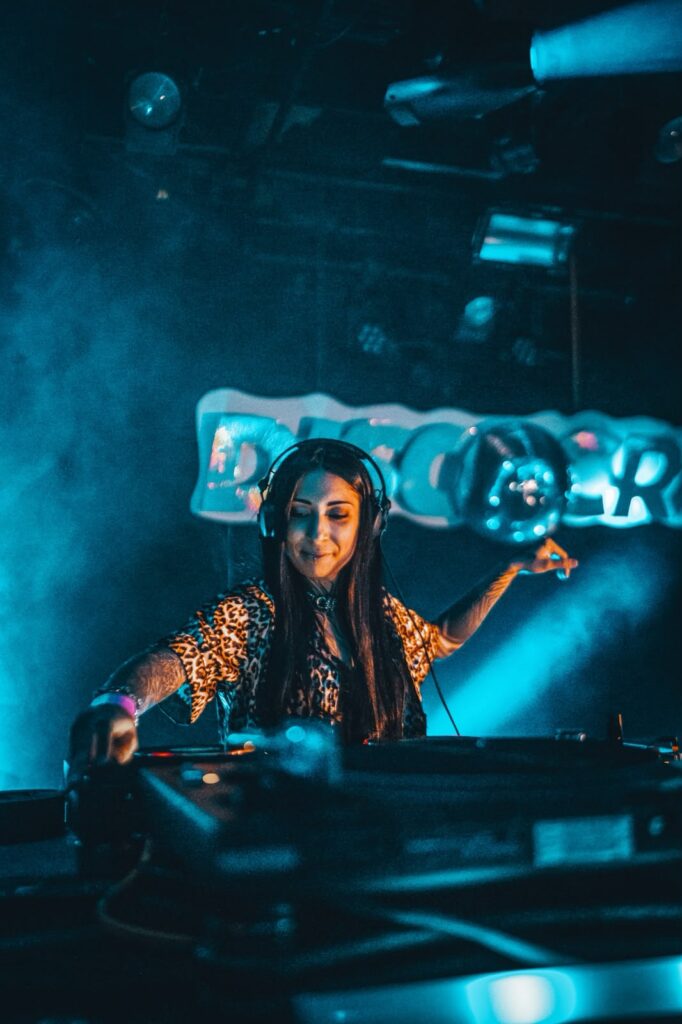
Today she performs as MISLIGHT. Hardgroove, underground techno, breaks and industrial influences at 145 BPM, where groove and tension never trade places — they coexist. Since 2024 she has been releasing with purpose and consistency: Carbon Zone, then Funk Coffee on The Acid Music Mind, Undergroove on vinyl, and in 2026 BIOLOGIK EP — the first release on her own label ŪNVØLD Records, co-founded with Shmirlap. Her music has also appeared on Synestrya and Sunburn. Each release a deliberate step, each one more clearly hers.
She performs at Prizme Concept as a resident, has played I Love Techno Europe and Les Plages Électroniques, and has just returned from Timeless Festival in Canada. We wanted her on the SUM roster because her music speaks for itself — and because the way she moves through this scene, with her own label, her own vision and her own rules, is exactly the kind of artist we want alongside us.
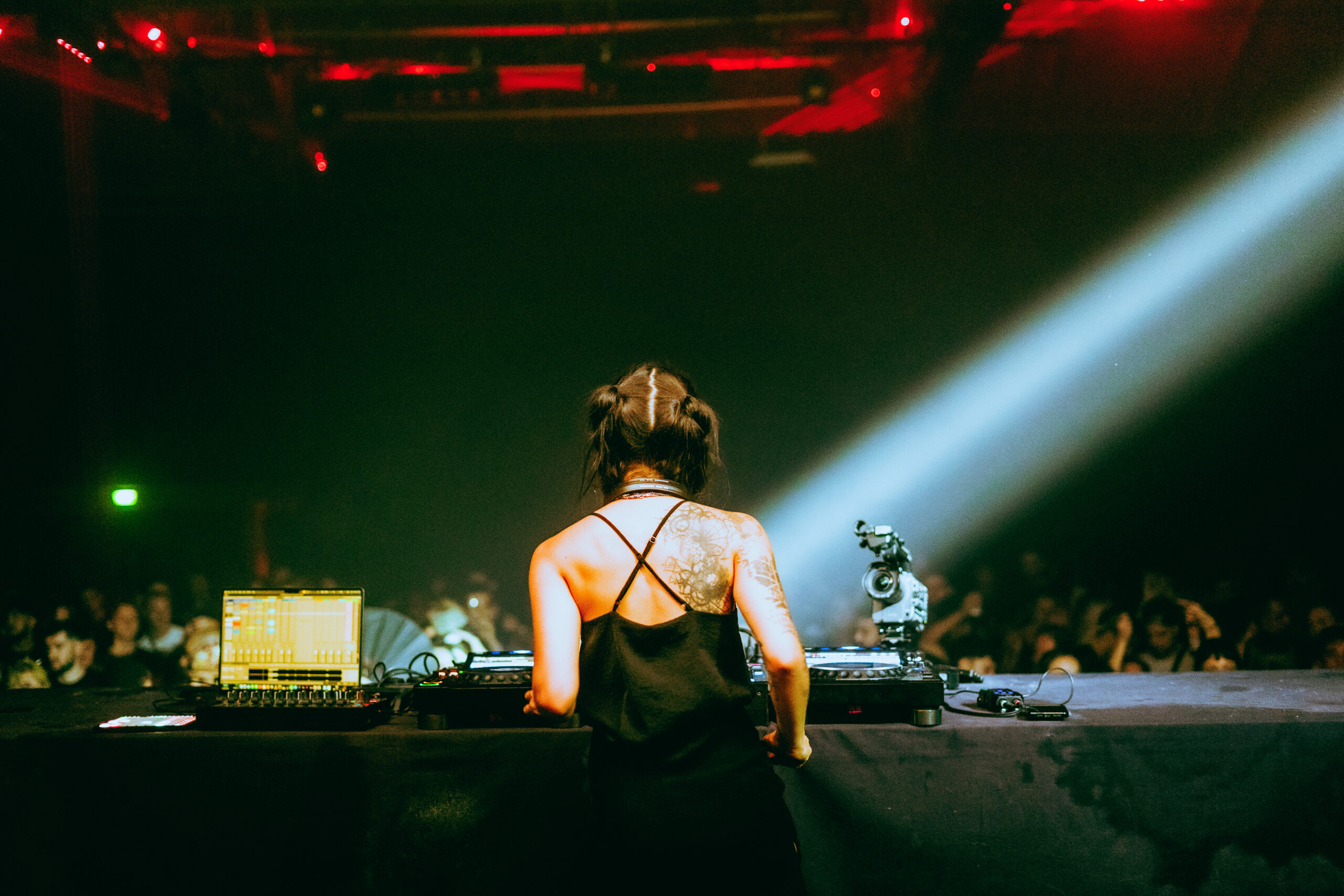
At what point did playing records stop being enough? When did you realise you needed to produce the sound yourself — and what changed when you started?
I actually started learning how to produce almost straight after I started DJing, in 2013. A friend of mine was producing, I used to watch him work, and it made me want to try it myself. I quickly installed Ableton and started experimenting, but I was also drawn to a more live and instinctive approach to electronic music. That’s when I started becoming interested in hardware and the idea of building a small live setup.
At the time, I had a tribe live set that I only got to perform once at a party — haha. But creating and preparing that live set taught me so much technically. Having to build a coherent setup and think about how all the elements would interact in real time helped me develop a lot of reflexes and train my ear. Even though I only performed it once, the whole experience was really formative for me.
I then kept experimenting with several analogue machines, which I found more intuitive and immediate than software at first. But I gradually came back to Ableton, because it was simpler and allowed me to compose and arrange my tracks more easily.
What really changed with production was that I was no longer just selecting other people’s tracks — I could start creating my own and build a universe that felt like me. It also taught me to listen to music differently, paying much more attention to details, textures, arrangements, and the energy of a track.
Your sound blends hardgroove, techno, breaks and industrial influences. What makes it recognisably yours, and how long did it take to find it?
I’ve always loved techno, especially when it has room to breathe and every groove really has its place, rather than just being layered on top of each other. I’ve moved through different worlds: I started out playing tribe music on vinyl, which is where I learned to DJ. Then techno came into my life very quickly, and it was a real love at first sight.
At first, I played slower techno. Today, around 145 BPM feels like the perfect cruising speed for me — it’s fast enough to create real tension and a very physical energy, while still leaving space for groove, texture and a more organic sensitivity. I love it when music can reach the body as much as the mind.
Hardgroove is a style I’m particularly drawn to because it can genuinely put me in a trance — I can listen to it for hours. I also love including breakbeat tracks in my sets. They allow me to break the rhythm, create a moment to breathe, and then make the return of the techno feel even more powerful.
I think my identity has developed over time, through all these influences. It sits somewhere between raw energy, percussion, groove, tension, and more open or unexpected moments.
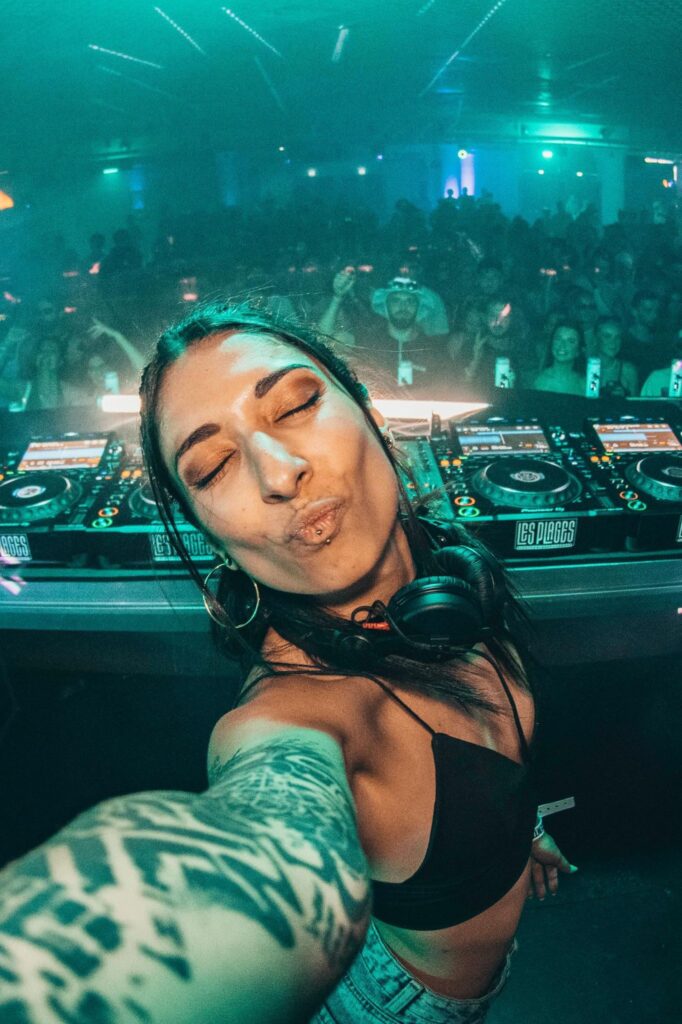
The free party scene has been central to your journey. What did that environment teach you that you couldn’t have learned anywhere else?
I entered the free party scene very early, when I was only fifteen. I had just returned to France after living in Morocco, and that was when I met what became my second family: Opsygen, a sound system from the south of France, near Marseille.
That world allowed me to meet some incredible people. I was surrounded by people older than me, who passed on the fundamental values of free parties: sharing, freedom, and respect for the music and for the people who keep the scene alive. When I was nineteen, I had the chance to play at a Sono Pirate party. I was still very young in the scene, but that was the exact moment I realised this was what I wanted to do with my life. It was a real turning point for me and it remains a very powerful memory in my journey.
I also had the opportunity to meet and share moments with crews such as Sono Pirate Unit, Tourista Debandade. I’m very grateful to have known that period and those people. They strengthened my connection to techno, because at the time, very few free parties were playing that kind of intense, powerful techno.
Despite the changes this scene has gone through, it has given me so much. A real musical culture, but also a different way of understanding parties, collective energy, and what music can represent beyond simply playing a set.
How do you read a dancefloor and decide where to take it? Is it instinct, preparation, or something in between?
For me, it’s really a mix of preparation and instinct. I need to tell a story through a set, so I always start with a clear thread running through it. I prepare my sets beforehand, but rather than planning a completely fixed order, I build blocks of three or four tracks that I know work well together. That gives me a solid foundation while still allowing me to adapt to the energy of the dancefloor.
Once I’m behind the decks, I pay close attention to the crowd’s reaction — do they need more tension, more groove, a more mental moment, or on the contrary, a moment to breathe? Depending on what I feel, I can stay in one direction for longer, switch to another block, or create contrast — for example, with a breakbeat or a more open track before bringing in something more percussive and intense.
Preparation helps me keep that thread running through the set while staying free. But in the end, it’s the crowd’s energy and my instinct in the moment that really decide where the set goes.
Carbon Zone, Funk Coffee, Undergroove on vinyl, and now BIOLOGIK EP — each release feels like a deliberate step. What was the intention behind BIOLOGIK specifically, and what does it mark for you artistically?
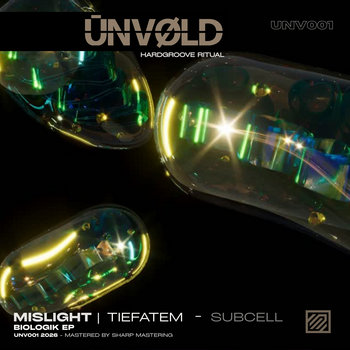
With BIOLOGIK, I wanted to create a connection between my personal journey and my current artistic identity. Before fully returning to music, I worked as a laboratory technician, particularly in parasitology and mycology. The EP’s title is a direct reference to that period of my life and to a scientific world that was also a part of me.
The artwork features mitochondria — essential structures within our cells that play a key role in producing the energy the body needs to function. This idea of energy, movement and living matter made perfect sense for the music I wanted to create on this EP: organic, physical and hypnotic hardgroove, driven by percussion, texture and rhythm.
Artistically, BIOLOGIK marks a more personal and more confident step for MISLIGHT. It represents a direction that feels deeply true to me, while bringing together two important parts of my journey: my former profession and my full return to music.
AI is reshaping how music is made — even in underground and hardgroove circles. Do you use any AI tools in your production process, or does it feel like something that has no place in what you do?
I don’t use AI in my music production process, and it’s not something I intend to integrate into my creative work. I understand that it can be a useful tool in certain fields, but for me, the core of a track has to remain human — the choices, the mistakes, the accidents, the time spent searching for a sound, and the emotion you put into it.
In techno, and especially in what I do, I want music to keep an instinctive and imperfect side. That’s often where a real identity comes from. I wouldn’t want a tool to replace the creative work, sensitivity, or vision of an artist.
ŪNVØLD Records — you and Shmirlap built something focused and uncompromising from the start. What does it mean to you to control the full chain, from production to release?
With ŪNVØLD, we mainly wanted to create something that truly reflects who we are, without having to fit into a box or adapt our music to what other people expect. It’s our own space, where we can choose the music we want to release, imagine the world around it, think about the visuals, and support each project in the way that feels right to us.
Shmirlap and I don’t have exactly the same universe — his sound is more rooted in acid techno, while mine is more hardgroove — but we share the same vision and the same desire to do things seriously, in our own way. Having our own label gives us more freedom to develop our projects while keeping a real sense of consistency.
I take care of the release artwork and visual creation in particular. It allows me to express myself in a different way than through music, and to give each project an image and an identity. I like every release to have its own universe while still keeping a common thread that makes ŪNVØLD recognisable.
It’s also very rewarding to see a release take shape from beginning to end. There is a whole world to build around a track, and being able to do that ourselves gives even more meaning to what we put out.
In a scene that moves fast and forgets quickly, what does it mean to you to build relationships that last?
It means a lot to me, because this scene moves very fast and people can sometimes forget quickly. Being invited back by people who have followed my journey is really meaningful. It shows trust, and for me, it’s important to build real connections — not just play one date and then move on.
At the same time, I also love discovering new people, new collectives and new places. That’s what helps a project grow and creates new connections. The most important thing is to stay open to new encounters while valuing the genuine relationships that are built over time.
We made you a proposal to join SUM — and you said yes. What convinced you?
We had already had the opportunity to work together through Prizme, so I already knew the way they worked. When SUM offered me a place on the roster, their approach and the words they used really touched me. I felt that they were genuinely listening to me and that they truly connected with my music.
I also liked the idea that my hardgroove sound could bring a different colour to the roster. For me, it’s important to move forward with people who understand your project and respect your identity — and that’s what I felt with SUM.
What’s coming next — dates, releases, projects? What does the next chapter of MISLIGHT look like?
I’ve just returned from Canada, where I had the chance to play at Timeless Festival. It was an incredible and really enriching experience — playing on another continent, discovering a new crowd and feeling a different kind of energy is something that will stay with me.
Next, I have dates coming up in Rennes and Bordeaux, with more to be announced soon. Now that the studio is fully set up, I’ll also be able to dedicate more time to it, create studio content and share more of that side of my artistic process.
I’m working on new tracks, the next ŪNVØLD releases, and new collaborations. I want to keep refining my hardgroove sound, release music that truly feels like me, and bring it to new dancefloors in France and internationally.
Last one — what does techno mean to you?
For me, techno is music about movement, freedom and collective energy. I love the fact that it doesn’t need lyrics to create an emotion or tell a story. Everyone can project their own feelings onto it, while still sharing the same moment with others.
It can be raw, mental, physical or hypnotic, and that range is exactly what speaks to me. In my sets, I try to build a progression and give the crowd space to get lost in the rhythm for a while, then come back together through the same energy.
What I find most powerful is that very different people can meet on the same dancefloor and move to the same tempo for one night. Maybe that’s what makes techno so special.
Follow MISLIGHT: Instagram · Soundcloud · Bandcamp
ŪNVØLD Records: Instagram
Leggi anche:
Lascia un commento